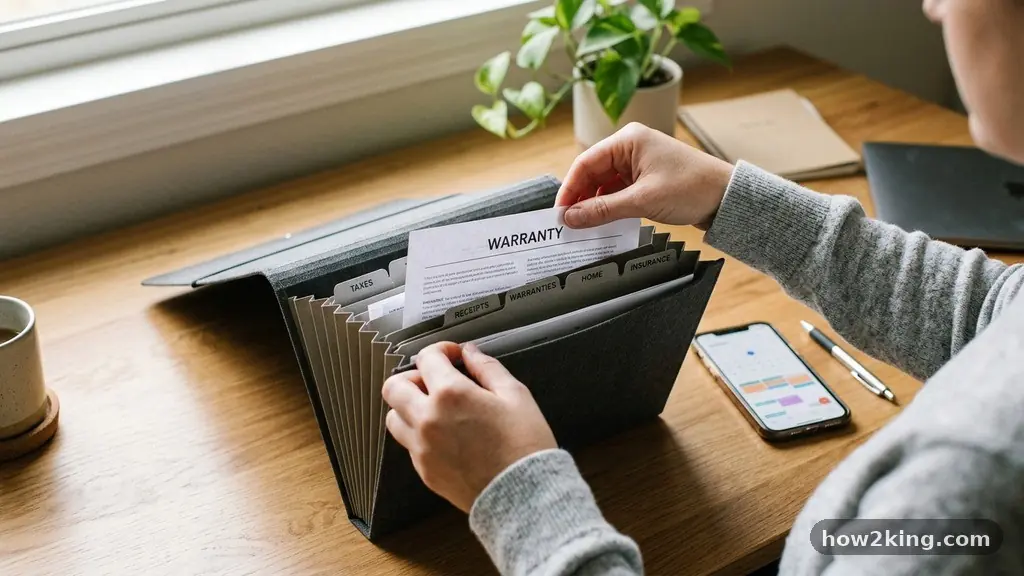
Keeping track of warranty dates for your household electronics is a simple habit that saves significant money and frustration when devices inevitably malfunction. Many people lose hundreds of dollars simply because they discard a receipt or forget to register a product before the coverage window expires. By setting up a reliable system today, you protect your household budget and ensure you can exercise your consumer rights when a product fails.
This process is about turning a chaotic pile of paper into an organized, accessible resource that works for you. You will gain peace of mind knowing that if your television or kitchen appliance stops working, you already have the solution at your fingertips.
Establish a Centralized Physical Filing System
The first step in managing your technical documentation is creating a dedicated physical space for every manual and receipt. Even in our increasingly digital age, many manufacturers still require a hard copy of your proof of purchase to honor a claim.
Dedicating a single accordion folder or a specific drawer in your home office prevents the frantic search that usually happens when an appliance breaks down. Label your folders by category, such as “Kitchen Appliances,” “Home Entertainment,” or “Computing Hardware,” to ensure you can retrieve documents within seconds.
When you purchase a new item, immediately staple the receipt to the front of the manual. If the receipt is thermal paper, which fades over time, take a quick photo or scan it right away before the ink disappears. Place these documents into your designated folder before you even set up the new device.
A common mistake is leaving receipts inside the product box or stuffed into a kitchen junk drawer, where they are easily misplaced or accidentally thrown away during cleaning. By creating a physical home for these items, you remove the stress of hunting for records during a stressful appliance failure.
Master the Art of Receipt Digitization
Digitizing your records is the most effective way to ensure you never lose a warranty claim due to a faded or misplaced receipt. Using a high-quality scanning app on your smartphone, capture an image of every receipt immediately after purchase.
Store these digital files in a secure cloud storage account, organized by folders that mirror your physical system. This method provides a backup if your house suffers a flood or fire, and it allows you to access your proof of purchase from anywhere using your phone.
When digitizing, make sure to include the date of purchase, the store name, and the total amount paid. It is also helpful to rename the file using a standard naming convention, such as “Date_Product_Brand_WarrantyExpiry.” For example, a file named “2024-05-12_Samsung_Fridge_Warranty.pdf” is much easier to search for than a generic “IMG_0042.jpg.”
Avoid the temptation to just dump everything into a single folder on your desktop; a well-organized file structure acts as a digital inventory management system that saves you hours of frustration later. Many people find that using cloud services like Google Drive or Dropbox simplifies this process, as they often include search features that can identify text within your scanned images.
Register Every Product Online
Product registration is a step most people skip, yet it is often the most important part of securing your coverage. When you register your item via the manufacturer’s website, you are officially creating a record of your ownership, which makes filing a claim much smoother.
Many companies offer exclusive benefits to registered users, such as early access to software updates, priority customer support, or even an automatic extension of the standard warranty period. Visit the official manufacturer’s website as soon as you unbox your purchase to see if they offer a portal for registration.
You will typically need your device’s model number and the serial number, both of which are usually found on a sticker on the back or bottom of the unit. Keep a master list of these numbers in a simple spreadsheet or a dedicated note-taking app to avoid flipping over heavy appliances or crawling under desks when you need to contact customer support.
A common mistake is assuming that your credit card’s extended warranty coverage is enough; while valuable, you still need to prove the product was registered and that you have a valid proof of purchase to satisfy the issuer’s requirements. By taking these five minutes to register, you turn a vague promise of support into a documented agreement.
Leverage Cloud Storage for Appliance Manuals
Physical manuals are bulky and often end up in a box under the bed, where they are forgotten until you move house. Instead of keeping the paper versions, download the PDF manual from the manufacturer’s website and save it alongside your digital receipt. Most companies provide these documents in their customer support portals, and having them in the cloud means you can search for troubleshooting tips using keywords rather than flipping through a hundred pages of multilingual instructions.
If you have a large collection of manuals, consider creating a “Home Electronics Library” folder within your cloud storage. Sub-divide this by room or device type so that every family member knows where to find information on how to reset the Wi-Fi router or clean the dishwasher filter.
This digital library serves as a comprehensive resource for consumer electronics maintenance, allowing you to quickly check if a specific behavior is a defect covered by your warranty or simply a feature you haven’t used before. Avoid the trap of keeping PDFs scattered in your “Downloads” folder; move them into your structured system immediately to ensure they remain accessible.
Implement an Expiration Notification System
Even the best-organized system is useless if you don’t know when your coverage is about to end. Use a digital calendar, such as Google Calendar or Outlook, to set recurring alerts for your warranty expiration dates.
Create a calendar entry for each device, set the expiration date, and add a reminder to trigger one month before that date arrives. This gives you enough time to thoroughly test your device and contact the manufacturer if you notice any subtle issues that might be covered under the original manufacturer warranty.
If you purchased an extended service plan, treat it as a separate entry in your calendar. These plans are often forgotten, and many consumers miss out on free repairs because they didn’t realize they were still covered. By setting these alerts, you transform your passive warranty documents into an active management tool.
A common mistake is failing to check the device for issues before the date passes; if you wait until the day after the warranty expires to report a problem, you will likely be responsible for the full cost of the repair. Use the “alert” time to perform a final inspection of your electronics while you are still fully protected.
Understand Your Consumer Rights
Knowing the basics of consumer law in your region empowers you to advocate for yourself if a company tries to deny a valid claim. In many jurisdictions, laws exist to protect buyers from defective goods, even if the written warranty period is technically over.
Familiarize yourself with the Federal Trade Commission guidelines on warranty law, which explain the difference between express and implied warranties. Understanding these rights helps you avoid being intimidated by customer support representatives who might try to push you toward expensive out-of-warranty repairs.
Documentation is your best defense when asserting these rights. If you have a clear record of when the product was bought, when it was registered, and a log of every time you have contacted customer support regarding a specific defect, you are in a much stronger position. Keep a “Communication Log” document where you record the names of agents you speak with, the dates of your calls, and the reference numbers for your cases.
This level of detail often discourages companies from attempting to bypass their legal obligations. Never rely on verbal promises from a phone agent; always ask for a summary of the call via email so you have a paper trail to reference later.
Use Database Software for Complex Households
For those with a large number of electronics or a smart home setup, basic folders might not be enough. Consider using specialized database software or home inventory apps designed to track assets.
These tools allow you to input the purchase price, serial number, warranty expiration date, and even photos of the item in a structured format. Some apps can even scan barcodes to automatically pull product details, saving you from manual data entry.
This approach is particularly useful if you need to provide an inventory list to your insurance company in the event of a theft or natural disaster. By maintaining a living database of your household items, you are not only tracking warranty dates but also keeping a clear record of your assets for financial planning.
A common mistake is trying to track too much detail at once; start by inputting your most expensive items first, such as computers, televisions, and large appliances, before moving on to smaller gadgets. Consistency is more important than comprehensiveness in the early stages, so focus on getting the most valuable items into the system before expanding your scope.
Frequently Asked Questions About Warranty Management
What should I do if I lose my receipt?
If you have lost your physical receipt, check your email for a digital copy if you purchased the item online. If you bought it in a physical store, contact the retailer to see if they can look up your purchase using your credit card number or loyalty program account. Some manufacturers may also accept a copy of your bank or credit card statement as proof of purchase if it clearly shows the date, the store name, and the transaction amount.
Does registering a product automatically extend the warranty?
Usually, no, but it often makes the process of claiming your standard warranty much faster. Some companies do offer a “bonus” warranty period if you register within a certain timeframe, such as 30 days after purchase. Always read the registration confirmation email to see if you have gained any additional coverage or benefits.
Are extended service plans worth the extra cost?
This depends on the item and your personal risk tolerance. Extended plans are often more beneficial for high-end items that are expensive to repair, such as high-end refrigerators or complex computing hardware. Before buying one, check the manufacturer’s standard warranty to see if it already covers the most likely failure points.
How do I handle a warranty claim if the manufacturer goes out of business?
This is a difficult situation, but you may still have recourse through the retailer where you purchased the item. Some retailers offer their own store-level warranties or return policies that might apply. If you paid with a credit card, check if your card issuer provides “purchase protection” or “extended warranty” benefits that could cover you even if the manufacturer is no longer available.
Is it necessary to keep the original packaging for the warranty?
In most cases, you do not need the original box to claim a warranty, provided you have a valid proof of purchase. However, keeping the box can make the shipping process easier if you need to send the item to a service center. If space is limited, feel free to recycle the box after the initial return period has expired.
Closing Thoughts on Warranty Maintenance
Keeping track of warranty dates for your household electronics is an investment in your financial future and your peace of mind. By establishing a consistent system for storing receipts, registering your devices, and setting proactive alerts, you eliminate the stress of dealing with unexpected repair costs. You are essentially building a safety net that ensures you get the full value out of every purchase you make.
Start today by gathering your most recent receipts and setting up your digital or physical folders. Small, consistent actions will eventually lead to a seamless system that protects your household assets for years to come. Reach out to your family members to share these habits, as keeping your home organized is a team effort that benefits everyone.